Transforming Design with Hand-Painted Floral Watercolor ClipArt
In the rapidly evolving world of digital design, there is a persistent and growing demand for assets that feel authentic, organic, and human. While vector graphics and flat illustrations have their place, they often lack the tactile warmth that connects emotionally with an audience. This is where Floral Watercolor ClipArt steps in as an indispensable resource for creators. By blending the timeless elegance of traditional painting with the convenience of modern digital files, these elements offer a unique bridge between artistry and utility.
Whether you are a seasoned graphic designer, a small business owner crafting your brand identity, or a hobbyist looking to elevate your scrapbooking projects, understanding how to leverage high-quality watercolor assets can significantly enhance your output. The key lies not just in having access to beautiful images, but in utilizing collections that offer versatility, high resolution, and true artistic integrity.
The Allure of Authentic Texture in Digital Spaces
One of the primary reasons designers gravitate toward Floral Watercolor ClipArt is the inherent texture. Unlike computer-generated gradients, hand-painted watercolors possess irregularities—soft edges, pigment pooling, and paper grain—that mimic real life. When these pieces are scanned at high resolutions, such as 300 DPI, they retain this nuanced detail even when scaled down for web use or printed on large formats.
This authenticity serves a functional purpose beyond aesthetics. In branding, for instance, consumers are increasingly drawn to businesses that appear approachable and artisanal. A logo or packaging design featuring hand-painted floral elements suggests care, craftsmanship, and attention to detail. It softens the corporate edge, making brands feel more personal and trustworthy. For wedding invitations or boutique stationery, this style evokes romance and nostalgia, tapping into emotional responses that sterile, geometric designs simply cannot achieve.
Versatility Across Physical and Digital Mediums
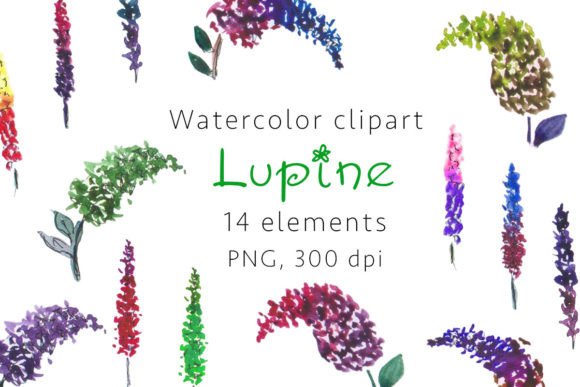
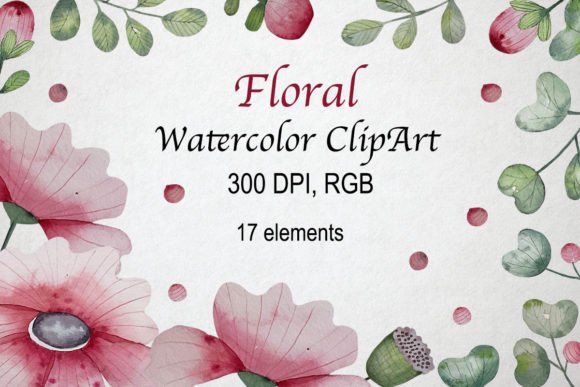
The true power of a well-curated collection, such as a set containing 17 distinct elements, lies in its adaptability. These graphics are not confined to a single type of project. Instead, they serve as modular building blocks for a wide array of creative endeavors.
- Print Products: From greeting cards and wedding invitations to decorative papers and fabrics, watercolor florals add a layer of sophistication. They work exceptionally well on textured paper stocks, where the digital print can mimic the look of original artwork.
- Branding and Logos: Small businesses in the beauty, wellness, and lifestyle sectors often use these elements to create cohesive visual identities. A simple leaf or bloom can become the cornerstone of a memorable logo.
- Digital Assets: In the realm of web design, these cliparts are perfect for headers, blog post featured images, and social media templates. Their transparent backgrounds allow for seamless integration into any layout without cumbersome editing.
- Planners and Organization: The rise of digital planning has created a niche for printable designs. Watercolor elements help categorize sections, mark important dates, or simply add joy to daily scheduling routines.
When you download a collection designed for instant use, you are essentially acquiring a toolkit. You might use one element for a mural art poster and another for a subtle watermark on a photography portfolio. The possibilities are limited only by your imagination.
Technical Specifications That Matter
While the artistic merit of Floral Watercolor ClipArt is crucial, the technical quality determines its usability. Many free resources online offer low-resolution images that pixelate when printed or look muddy on high-definition screens. To ensure professional results, it is vital to choose collections that meet specific standards.
High-resolution files, typically sized at 3000 px x 3000 px, provide the flexibility needed for various applications. This dimensions allow you to scale the image up for large-format printing, such as posters or fabric wraps, without losing clarity. Conversely, you can scale them down for intricate details on business cards or website icons. The standard of 300 DPI (dots per inch) is the industry benchmark for print quality, ensuring that every brushstroke remains crisp and defined.
Furthermore, the file format plays a critical role. PNG files with transparent backgrounds are essential for efficient workflow. They eliminate the need for time-consuming background removal processes in software like Photoshop or Canva. With a transparent background, you can drag and drop the floral element directly onto your canvas, layering it over text, patterns, or photographs with ease. This efficiency is particularly valuable for designers working under tight deadlines or those who manage multiple client projects simultaneously.
Color Accuracy and Monitor Variations
It is important to note that colors may vary slightly depending on your computer monitor settings. Watercolor pigments are complex, often involving subtle shifts in hue and saturation that different screens interpret differently. Most professional collections are provided in the RGB colorspace, which is optimized for digital viewing. However, if you are preparing files for professional printing, you may need to convert them to CMYK. Keep in mind that some vibrant watercolor tones might appear slightly duller in print due to the limitations of ink compared to backlit screens.
To mitigate this, always review the preview images carefully before purchasing or downloading. Look for collections that offer a realistic representation of the final product. If possible, print a test sheet on your intended paper stock to gauge how the colors translate from screen to physical medium. This step ensures that the final product matches your vision, whether it is a delicate pastel bouquet or a bold, vibrant arrangement.
Integrating Watercolor Elements into Modern Workflows
Incorporating Floral Watercolor ClipArt into your design process does not require advanced artistic skills. Modern design tools have made it easier than ever to manipulate and customize these elements. Here are a few practical strategies for maximizing their potential:
- Layering for Depth: Don’t be afraid to overlap multiple elements. Combining leaves, stems, and blooms can create custom arrangements that look unique to your project. Adjust the opacity of certain layers to create a sense of depth and dimension.
- Contrast and Balance: Use the organic shapes of watercolor flowers to balance rigid geometric layouts. For example, pair a structured grid-based website layout with flowing floral accents in the corners to soften the overall aesthetic.
- Color Harmony: Extract color palettes from the clipart to use in your typography and background elements. This creates a cohesive look that ties the entire design together. Many design apps allow you to pick colors directly from an image, making this process seamless.
- Masking Techniques: Use the floral shapes as masks for photographs. This technique is popular in magazine layouts and social media graphics, where an image appears within the silhouette of a flower or leaf, adding an artistic flair to standard photography.
These techniques demonstrate that watercolor clipart is not just a decorative afterthought but a foundational design element. It can dictate the mood, guide the viewer’s eye, and establish the tone of the entire piece.
Choosing the Right Collection for Your Needs
With countless options available, selecting the right Floral Watercolor ClipArt collection requires careful consideration. Look for sets that offer variety in terms of flower types, stages of bloom, and accompanying foliage. A collection with 17 elements, for instance, should provide a good mix of focal flowers and filler greens. This diversity ensures that you can create balanced compositions without needing to supplement with other assets.
Additionally, consider the style of the watercolor. Some artists prefer loose, abstract washes, while others opt for detailed, botanical accuracy. Your choice should align with your brand personality or project theme. A whimsical, loose style might suit a children’s book or a casual blog, whereas a detailed, realistic style may be better suited for high-end wedding stationery or luxury product packaging.
Ultimately, the value of these digital assets lies in their ability to save time while elevating quality. Instead of spending hours painting each element from scratch, you can access professional-grade artwork instantly. This allows you to focus on the broader creative vision, experimenting with layouts and concepts rather than getting bogged down in the minutiae of illustration. By investing in high-quality, versatile Floral Watercolor ClipArt, you equip yourself with a powerful tool that enhances both your productivity and your creative expression.