Startup Development: Strategic Visual Communication for Early-Stage Growth
In the chaotic early stages of building a new venture, clarity is not just a luxury; it is a survival mechanism. Startup development encompasses far more than coding a minimum viable product or securing seed funding. It involves the meticulous crafting of a narrative that resonates with investors, partners, and early adopters. At the heart of this narrative lies visual communication. The ability to translate complex business models, operational workflows, and value propositions into digestible, engaging visuals can significantly accelerate your growth trajectory. This is where strategic asset selection becomes critical.
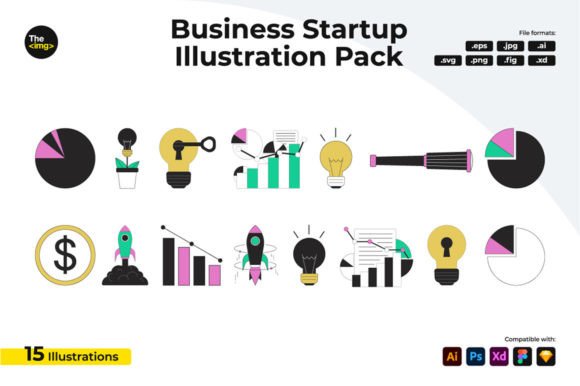
Many founders underestimate the psychological impact of design consistency. When you present a pitch deck, a landing page, or an internal roadmap, the visual language you choose signals professionalism, attention to detail, and brand maturity. Utilizing a curated collection of assets, such as a startup development flat line color vector icons pack, allows teams to maintain this consistency without the overhead of custom illustration from scratch. These resources are not merely decorative; they are functional tools that enhance comprehension and retention.
The Strategic Role of Visual Assets in Business Planning
Effective startup development requires constant iteration and communication. Whether you are mapping out user journeys for your product team or explaining revenue streams to potential stakeholders, visual aids serve as a universal language. A well-designed icon or illustration can replace paragraphs of explanatory text, reducing cognitive load for your audience. This efficiency is vital when time is scarce and attention spans are short.
Consider the practical application of editable lineart elements on white. These assets offer flexibility that rigid imagery cannot. By using simple outline cartoon style spot illustrations, you can adapt the visual tone to match your brand’s voice—whether it is playful and approachable or serious and corporate. The key is intentionality. Randomly inserting graphics creates noise; strategically placing them creates structure. For instance, using a specific set of icons to represent different departments in an organizational chart helps viewers quickly grasp the hierarchy and relationships within your company.
Furthermore, visual consistency builds trust. When a user sees the same stylistic elements across your website, email newsletters, and presentation decks, it reinforces brand recognition. This subconscious reinforcement is crucial for startup development because early-stage companies often lack the brand equity of established competitors. You must earn trust through every touchpoint, and cohesive design is a powerful lever in that effort.
Selecting the Right Tools for Scalable Design
Not all visual assets are created equal. When sourcing materials for your startup development toolkit, technical compatibility and versatility are paramount. A high-quality collection should offer multiple file formats to ensure seamless integration into various workflows. For example, having access to EPS, JPEG, and AI files allows designers to work with vector graphics that can be scaled infinitely without loss of quality. This is essential for creating large-format banners or high-resolution print materials.
Simultaneously, web-based applications require lightweight, optimized assets. Formats like SVG and PNG on transparent background are indispensable for modern web graphic design and animation. SVGs, in particular, offer code-based scalability and interactivity, making them ideal for responsive websites that must look sharp on any device. Meanwhile, PNGs with transparency allow for easy layering over different colored backgrounds, providing designers with the freedom to experiment with layout and composition.
For teams utilizing modern design collaboration tools, compatibility with platforms like XD and FIG (Figma) is non-negotiable. These tools have become the standard for interface design and prototyping. Being able to drag and drop ready-made elements directly into your design system speeds up the iteration process considerably. This efficiency translates directly into faster time-to-market, a critical metric in startup development.
Balancing Speed and Customization
One of the most common pitfalls in early-stage startup development is the false dichotomy between speed and quality. Founders often believe they must choose between launching quickly with generic templates or delaying launch to create bespoke assets. However, smart resource utilization offers a third path. Using a comprehensive collection of 15 cartoon illustrations or similar packs provides a middle ground. These assets are pre-designed but highly customizable.
By starting with a solid foundation of professional-grade illustrations, you can focus your limited resources on customization rather than creation. Change the colors to match your brand palette, adjust the line weights to fit your aesthetic, or combine elements to create unique scenes. This approach allows you to maintain a high standard of visual polish while moving at the speed required by the market. It is a pragmatic strategy that acknowledges the resource constraints typical of startups while refusing to compromise on presentation.
Moreover, these assets are not static. They can serve as the basis for backgrounds for animations or dynamic content. In an era where video and motion graphics dominate social media engagement, having vector assets that can be easily animated is a significant advantage. You can create short explainer videos, social media stories, or interactive web elements that bring your static content to life, thereby increasing engagement and dwell time.
Risks of Unintentional Design Choices
While visual assets are powerful, their misuse can undermine your startup development efforts. The primary risk is inconsistency. Mixing disparate styles—such as combining photorealistic images with flat cartoons, or using icons from five different sources—creates a fragmented brand identity. This fragmentation can confuse your audience and signal a lack of strategic direction. It suggests that the company is piecing things together haphazardly rather than executing a coherent vision.
Another risk is over-reliance on clichés. The startup world is saturated with certain visual tropes: rockets, lightbulbs, and handshakes. While these symbols are universally understood, they can also make your brand appear generic and unoriginal. To mitigate this, use standard icons as functional markers but invest creative energy in how you frame them. Combine them with unique copy, unexpected color combinations, or unconventional layouts. The goal is to use familiar visual language to facilitate understanding while injecting enough distinctiveness to remain memorable.
Additionally, ignoring accessibility considerations can exclude potential customers. Ensure that your chosen icons and illustrations have sufficient contrast against their backgrounds and that important information is not conveyed solely through color or imagery. Alt text and proper semantic HTML structure should accompany visual elements to ensure your content is accessible to users with disabilities. This is not just a legal or ethical imperative; it expands your market reach and improves SEO performance.
Long-Term Value and Brand Evolution
Investing in a versatile visual library supports the long-term evolution of your brand. As your startup development progresses from ideation to scaling, your visual needs will change. A flexible asset pack grows with you. Initially, you might use these illustrations for pitch decks and basic landing pages. Later, as you expand your marketing efforts, you can repurpose them for blog headers, email campaigns, and paid advertising creatives.
This scalability reduces the need for frequent, costly redesigns. Instead of starting from zero every time you launch a new feature or enter a new market, you have a established visual vocabulary that can be extended and adapted. This continuity helps maintain brand equity over time. Customers who encountered your brand in its early days will recognize the visual cues, fostering a sense of familiarity and loyalty even as the company matures.
Furthermore, staying updated with new design trends and assets is crucial. Subscribing to resources like TheImg studio ensures that you have access to fresh illustrations and discounts on new packs. This ongoing influx of creative material keeps your brand looking current and relevant. In the fast-paced digital landscape, stagnation is a risk. Regularly refreshing your visual content signals that your company is active, innovative, and attentive to detail.
Making Intentional Decisions for Better Outcomes
Ultimately, startup development is about making better decisions with limited resources. Choosing the right visual assets is one such decision. It requires understanding your audience, defining your brand personality, and selecting tools that align with your technical capabilities. Do not treat design as an afterthought. Integrate it into your strategic planning from day one.
Ask yourself: What story am I trying to tell? Who is my audience, and what visual language do they respond to? How can I maintain consistency across all touchpoints? By answering these questions, you can use resources like vector character packs and editable lineart elements not just as decoration, but as strategic levers for growth. Remember, the goal is not just to look good, but to communicate effectively, build trust, and drive action. When used intentionally, high-quality visual assets become an integral part of your competitive advantage, helping you navigate the complexities of startup development with clarity and confidence.
For those looking to enhance their visual toolkit, exploring specialized shops for vector characters for your projects and ready-made banners can provide the immediate boost needed to elevate your brand presence. Stay informed, stay adaptable, and let your visual strategy support your broader business objectives.